
For most saltwater docks on the Florida Panhandle, the best material for dock surface is capped composite or PVC decking set on pressure-treated framing and marine-grade pilings. FRP grating is the better pick when light needs to reach seagrass below. Wood still makes sense when the upfront budget matters most.
That answer comes with a catch, though. A dock is really three systems stacked together: pilings in the water, framing above them, and the decking you walk on. Each one takes a different beating in Fort Walton Beach, Destin, and along Choctawhatchee Bay, so the strongest builds mix materials instead of picking just one.
What's the Best Material for Dock Pilings in Salt Water?
Pressure-treated Southern yellow pine rated for saltwater is still the standard choice for Gulf Coast dock pilings. Pilings live in the harshest zone of any dock. They sit in salt water, take wave impact, and face shipworms and gribbles, two marine borers that tunnel through untreated wood fast.
The industry standard for saltwater is CCA (chromated copper arsenate) treatment at 2.5 pounds per cubic foot, rated AWPA UC5B or UC5C, which matches UF/IFAS guidance on pressure-treated wood in Florida. With that treatment and good installation, Gulf Coast wood pilings typically last 25 to 35 years. Untreated, they can fail in under five.
Pile caps help shed water, and piling wraps add a barrier against borers. Fiberglass and composite pilings are also available for owners who want an alternative to wood. If you're upgrading an older dock, check the pilings first. New decking on tired pilings is money spent in the wrong order.
What Should Dock Framing Be Made Of?
Most dock framing should be pressure-treated lumber rated UC4B or UC4C, joined with stainless steel hardware. Framing rarely gets attention, yet it usually decides how long the whole dock lasts. Composite and PVC decking often outlast the frame beneath them.
Stringers (the long support beams) and joists sit close to the water, so that treatment rating matters. Hardware matters just as much. Copper-based wood treatments and salt water both speed up corrosion, so saltwater docks call for stainless steel fasteners and connectors, with Type 316 being the go-to grade near the Gulf.
Spacing counts too. Composite and PVC boards have specific joist-spacing requirements, and an older wood frame may not match them. That's why swapping boards on an old frame isn't always a simple job.
Comparing the Best Material for Dock Surface Options
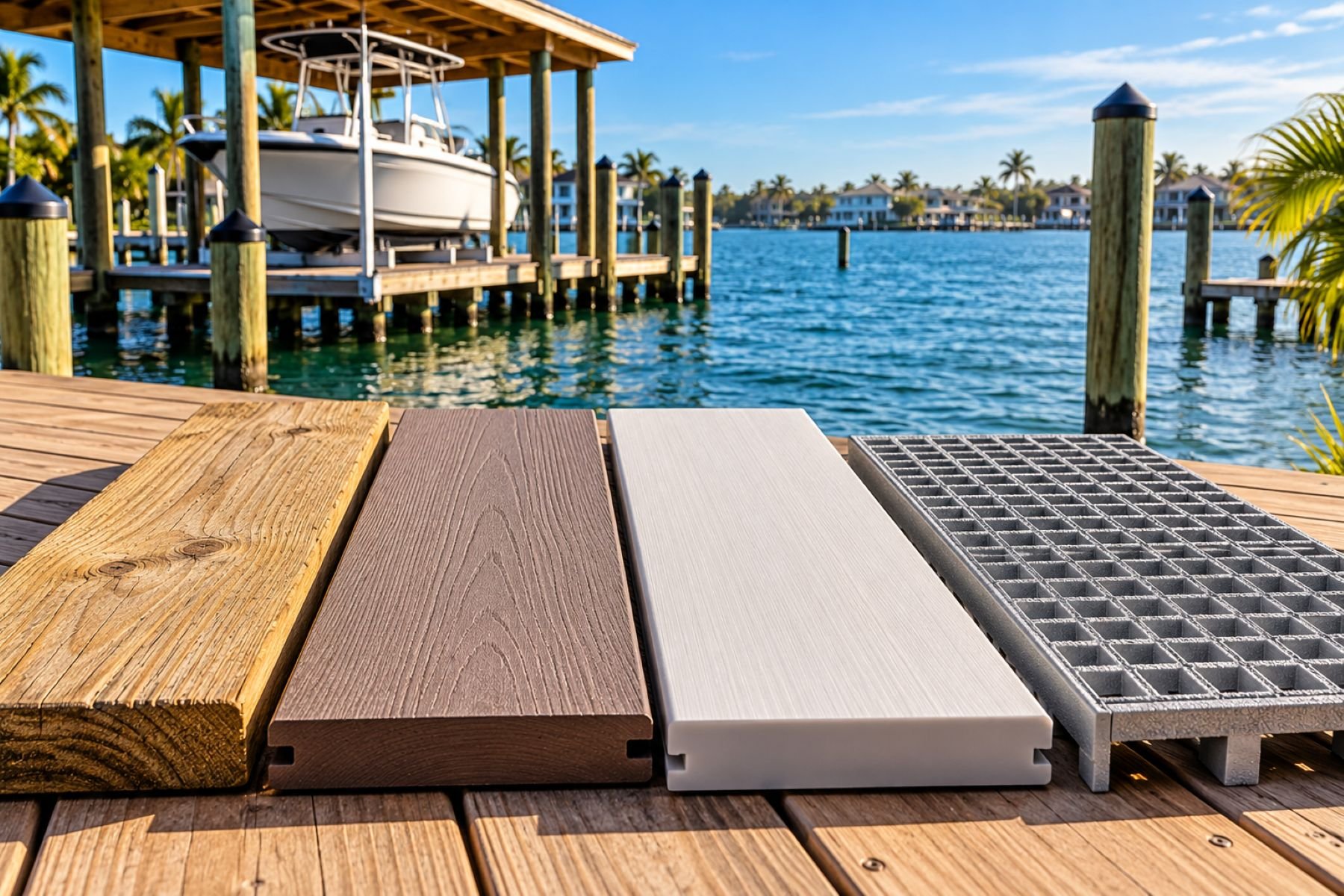
Your decking is the part you see, touch, and maintain. Here's how the four main contenders for the best material for dock surface hold up on a coastal dock.
Pressure-treated wood
Wood costs the least upfront and feels natural underfoot. The tradeoff is upkeep. Gulf sun and salt spray lead to checking, splinters, and warping, so plan on regular cleaning and resealing.
Composite decking
Capped composite blends wood fiber and recycled plastic inside a protective polymer shell. It resists fading, won't splinter, and pairs well with hidden fasteners for a clean surface. Darker colors can get hot in direct afternoon sun, and cut ends need care in shaded, damp spots.
PVC dock decking
PVC dock decking is 100% plastic, with no wood fiber at all. That makes it the stronger choice against mold and mildew in humid coastal air.
It's lighter than composite, and lighter colors tend to run a bit cooler. It does expand and contract more with heat, so installers leave wider gaps. It usually costs more than composite, too.
FRP grating
FRP (fiberglass-reinforced plastic) grating is built for harsh marine settings. It shrugs off salt water, has a gritty non-slip surface, and stays cooler than metal decking. Open-grid panels let sunlight and water pass through.
Its look is more industrial, and pricing varies widely by panel type, so get a quote before you commit. Over seagrass, though, it's often the best material for dock surface, full stop.
| Material | Upfront cost | Upkeep | Heat underfoot | Best fit |
|---|---|---|---|---|
| Pressure-treated wood | Lowest | High (regular sealing) | Cooler than composite or PVC | Budget builds, rustic look |
| Capped composite | Mid to high | Low | Can run hot in dark colors | Most residential docks |
| PVC | High | Low | Cooler in light colors | Humid, shaded, or high-splash areas |
| FRP grating | Varies by panel | Low | Stays cooler than metal | Seagrass areas, high-traffic docks |
Not sure which one suits your waterfront? Contact Property Image to talk through what your existing pilings and frame can support before you choose.
Wood vs Composite Dock Decking: Which Pays Off?
Wood wins on day one. Composite usually wins over time.
The wood vs composite dock question really comes down to labor. Wood asks for sanding, sealing, and board replacement every few years, and those costs add up. Composite costs more to buy but needs far less upkeep, so the savings can make up the difference the longer you own the dock.
If you're selling soon, wood can still be the smarter spend. Neither one is automatically the best material for dock surface; it depends on how long you'll be there.
Does Your Dock Sit Over Seagrass?
This question can change your whole materials list. Seagrass grows in shallow, protected water across Northwest Florida, and the Choctawhatchee Basin Alliance monitors dozens of seagrass sites around Choctawhatchee Bay alone. These plants need sunlight to survive.
Florida dock construction guidelines have long addressed this with rules on height, width, and light. Over seagrass, walkways are often required to sit at least five feet above mean high water, stay four feet wide or less, and leave half-inch gaps between boards. Grated decking used in these areas has been required to have at least 43% open space. FRP grating with enough open area is one way to meet that. A raised walkway with gapped boards is another.
These guidelines date back years and rules can vary by site and agency, so confirm current requirements during permitting. Property Image manages marine projects from planning and design through permitting, which keeps those details off your plate.
How to Choose the Best Material for Dock Surface Upgrades
Start with the structure, then pick the surface. A simple way to think about it:
Inspect pilings and framing first. If they're sound, a decking-only upgrade makes sense.
Check for seagrass. If it's present, plan on grated decking or a raised design.
Weigh upkeep against budget. Choose wood if cost comes first, composite for low upkeep at a fair price, and PVC for the toughest moisture.
Think about bare feet. Lighter-colored boards stay more comfortable in July.
For a full rebuild, the best material for dock surface usually lands on composite or PVC, paired with UC5B or UC5C pilings and stainless steel hardware. That combination gives Gulf Coast owners a dock built to handle salt, sun, and storms.
Ready to plan your upgrade? Talk with Property Image's licensed and insured team about marine dock construction or a new marine deck anywhere along the Florida Panhandle. Call (850) 374-8203 to get your project on the calendar in Fort Walton Beach and surrounding waterfront communities.