
Rebuilding After Hurricane Isaias? Build Your Dock and Seawall for the Next Storm
Hurricane Isaias was another powerful reminder that waterfront structures must withstand much more than everyday wind and waves. If your dock or seawall was damaged this past weekend, rebuilding it exactly as it was may leave it vulnerable to the next severe weather event.
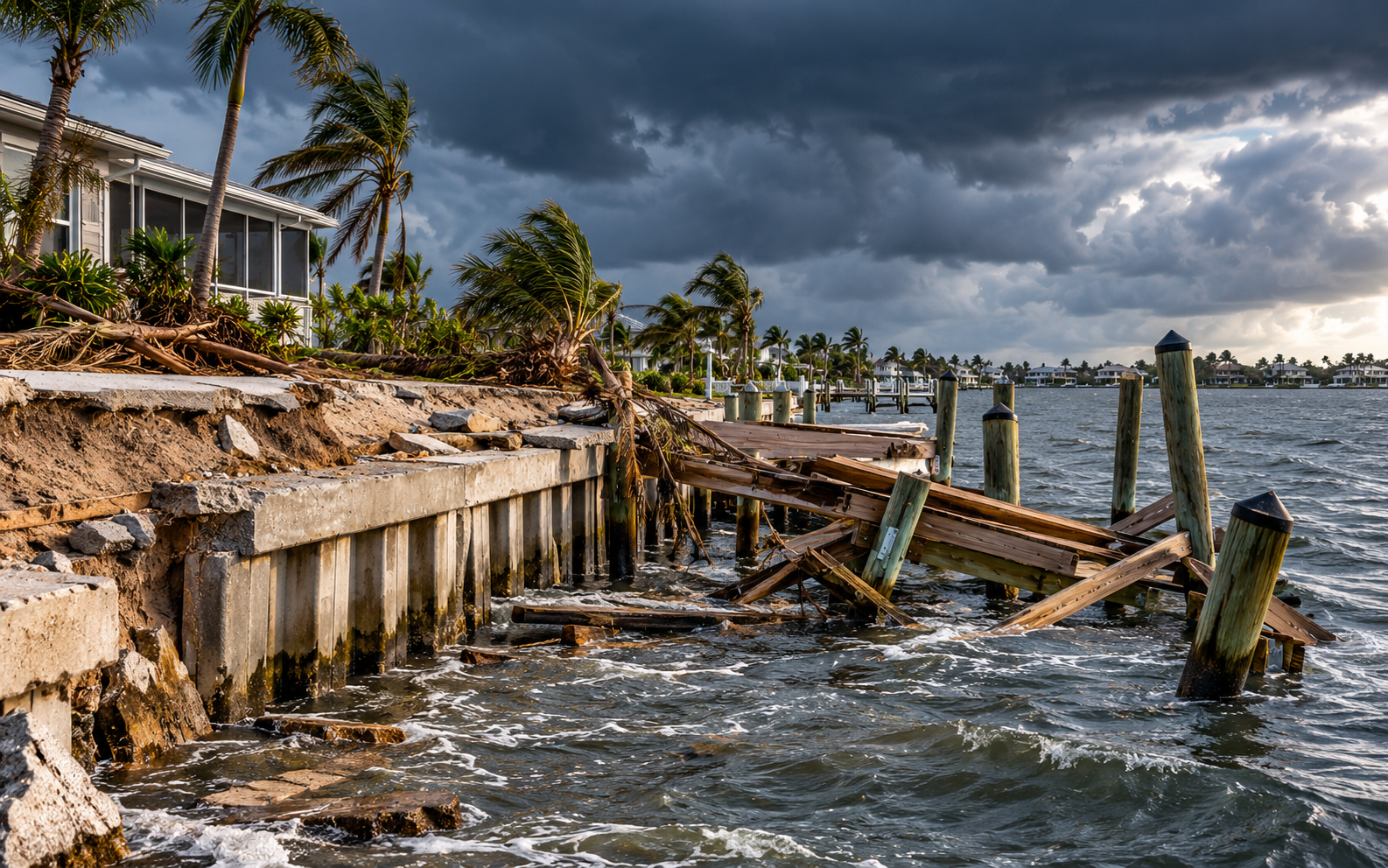
No waterfront structure can be guaranteed to survive every hurricane without damage. However, a properly designed and constructed dock or seawall can significantly reduce the risk of major failure. The key is to design the entire system for the property’s location, soil conditions, water exposure, intended use, and anticipated storm loads.
Strong docks begin with the pilings
Pilings form the foundation of a dock. Their diameter, length, material, spacing, and depth of embedment all affect the structure’s ability to resist wind, waves, currents, uplift, and lateral movement.
The installation method is equally important. Depending on the site, soil conditions, piling material, and design requirements, pilings may be installed using:
Water jetting
Impact hammering
Vibratory driving
Drilling
A combination of jetting and hammering
Sleeves reinforced or filled with concrete
Each installation method has specific applications, advantages, and limitations. The appropriate method depends on factors such as soil composition, water depth, site access, environmental restrictions, exposure, and the loads the dock is expected to carry.
Pilings that are too small, installed too shallowly, or placed using an unsuitable method may shift, lean, settle, or pull out during a major storm. Proper design and installation create a more stable foundation for the entire dock.
Every structural component matters
A durable dock is a complete structural system. Cross ties, ledgers, joists, beams, and stringers must be properly sized and securely connected so loads can be transferred throughout the structure.
Lumber dimensions should be selected according to the dock’s location and exposure. A dock in a protected canal does not experience the same conditions as one located on an open bay, river, sound, or coastal shoreline. Water depth, wave action, currents, wind exposure, soil conditions, intended use, and anticipated loads can all affect the required materials and construction details.
Use the correct marine-grade hardware
Even properly sized lumber can fail when it is connected with inadequate hardware. Marine environments are extremely corrosive, so bolts, screws, brackets, washers, and other connectors must be suitable for the conditions and compatible with the lumber and decking materials being used.
Correct hardware selection, placement, and installation help the dock resist uplift, twisting, separation, and corrosion-related failure. Small savings on fasteners and connectors during construction can lead to much larger repair costs later.
Decking is part of the structural design
Decking should be selected for more than appearance. Common options include pressure-treated wood, composite decking, and open-grid synthetic decking. Each material has advantages and limitations related to cost, maintenance, weight, heat retention, traction, weather resistance, fastening requirements, and expected service life.
Wood offers a traditional appearance and can be cost-effective, but it requires ongoing maintenance and may split, warp, or deteriorate over time. Composite decking can provide a consistent appearance with reduced maintenance, but it may retain heat, add weight, and require specific framing and fastening methods.
Open-grid synthetic decking allows more water and air to pass through the walking surface. This may help reduce uplift and pressure on the dock during waves, flooding, and storm events. However, it must be properly supported, correctly fastened, and suitable for the dock’s intended use.
Deck-board spacing is also important. Proper spacing allows for drainage, expansion, and the movement of water and air. Inadequate spacing can increase pressure on the structure and contribute to lifted or damaged decking.
Property Image Marine recommends installing dock decking with appropriate exterior or marine-rated screws instead of nails. Screws generally provide better holding strength and make it easier to replace individual boards when maintenance is required.
The decking material, framing layout, spacing, and fasteners should all be considered during the design process. These decisions affect the dock’s longevity and storm performance—not just its appearance.
Durable seawalls require proper design and engineering
Seawalls must also be designed as complete systems. The visible wall is only one part of the structure. Sheet piling, deadmen, tie rods, anchors, drainage components, and erosion-control materials must work together to resist soil pressure, water pressure, waves, and storm-related loading.
Property Image Marine can develop a location-specific seawall solution and coordinate the design and engineering required for the project. Important considerations include the wall’s height, surrounding grades, soil conditions, water depth, exposure, surcharge loads, drainage needs, and applicable permitting requirements.
Sheet-pile thickness and embedment are critical
The thickness, profile, material, and embedment depth of the sheet piling directly affect a seawall’s strength and stability. Sheet piling must extend deeply enough into suitable soil to resist sliding, rotation, undermining, and the pressures acting against the wall.
A taller wall or a wall exposed to greater loads may require thicker or heavier sheet piling, deeper embedment, stronger supports, or a combination of these measures. Simply replacing damaged sheets with the same material and embedment depth may repeat the weaknesses of the previous installation.
Deadmen and tieback anchors support the wall
Deadmen and tieback systems help keep a seawall upright by transferring loads away from the wall and into stable soil behind it. Their size, depth, spacing, distance from the wall, angle, and connection details are all important.
The placement and angle of each deadman and tieback assembly should be designed in relation to the height of the wall and the forces expected at the site. Improper placement can substantially reduce the system’s effectiveness.
Tie rods, anchors, connection hardware, and deadmen can be appropriately upsized when engineering calculations show that greater capacity is needed. This can help prevent bending, stretching, connection failure, or breakage when stormwater and elevated water levels place additional loads on the seawall.
Drainage reduces pressure behind the seawall
Water trapped behind a seawall can create significant hydrostatic pressure. Drainage openings, weep holes, relief vents, and other properly designed water-relief systems allow water to escape more quickly. This can reduce pressure against the wall following heavy rain, flooding, or a major storm.
Drainage components must be properly sized, positioned, installed, and maintained. They should allow water to drain without carrying the supporting soil through the wall.
Filter fabric and drainage protect the entire seawall system
Geotextile filter fabric installed behind a seawall can help prevent soil from washing through joints, drainage openings, and other gaps. The fabric allows water to pass while retaining the supporting soil.
Whether a seawall is constructed from riprap, concrete, vinyl, composite, steel, or wood, it will not perform properly or provide its intended service life without an effective drainage plan. Proper drainage relieves hydrostatic pressure, helps prevent soil loss, and reduces the forces acting against the wall.
The drainage plan may include filter fabric, drainage stone, weep holes, relief vents, perforated piping, or other site-specific components. Poorly designed or installed drainage can lead to soil erosion, voids, settlement, sinkholes, wall movement, and premature structural failure.
Build for long-term value
A dock or seawall designed for greater durability may cost slightly more initially than a basic replacement. However, suitable pilings, adequate sheet-pile embedment, properly sized framing and tieback systems, quality decking, effective drainage, erosion control, and corrosion-resistant hardware can reduce maintenance expenses and the likelihood of rebuilding after every major storm.
Property Image Marine has more than 20 years of experience in marine construction and related building work. We evaluate the location, exposure, soil conditions, intended use, and applicable requirements to develop an appropriate solution for each waterfront property.
If Hurricane Isaias damaged your dock or seawall, now is the time to consider more than simply restoring what was there before. Location-specific design, proper engineering, quality materials, and experienced installation can provide greater durability, better long-term value, and increased confidence when the next severe weather event arrives.
Contact Property Image Marine to discuss an evaluation and a dock or seawall design tailored to your waterfront property.
All designs and construction should comply with applicable engineering requirements, manufacturer specifications, permits, building codes, environmental regulations, and local authority approvals. Site conditions and performance during severe weather can vary, and no structure can be represented as hurricane-proof.