
Extending the Life of Your Seawall: Practical Maintenance Tips for Waterfront Properties
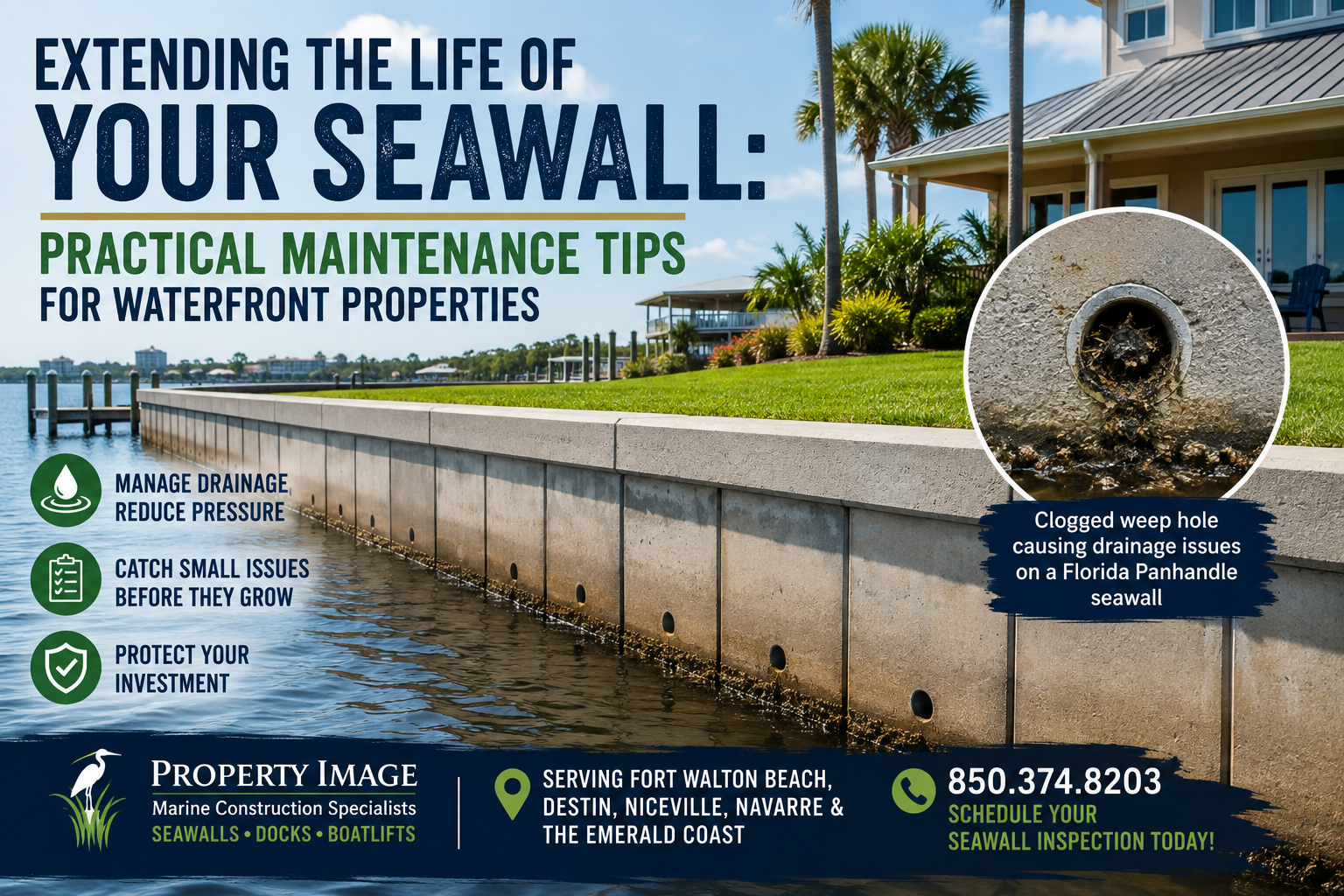
A seawall doesn't fail overnight. It fails slowly, through years of small maintenance items nobody got around to. These seawall maintenance tips cover the checks that catch problems early, plus the two issues we hear about most from Fort Walton Beach property owners.
Already noticing a problem? Property Image offers seawall inspections throughout the Florida Panhandle. Call 850.374.8203 to get on the schedule.
What Causes Most Seawall Problems in Fort Walton Beach?
Two requests land on our desk more than any other. The first: "My seawall is leaning toward the water." The second: "The soil behind my seawall keeps settling, no matter how many times I add fill." Both point to the same root cause of water pressure and drainage, just working against the wall in different ways. That's the gap these seawall maintenance tips are built to close.
A leaning wall usually means hydrostatic pressure has built up behind it faster than the structure was designed to release it. Water gets trapped in the soil, pushes outward against the wall face, and over time that pressure shifts the wall toward the water. Settling soil is the flip side of the same coin. When drainage isn't working, fine soil particles wash out through gaps, cracks, or failed weep holes, leaving voids behind the wall that show up as sunken spots in your yard.
Here's the tricky part: both problems can be underway for months before they're visible from the surface. That's why maintenance matters more than most waterfront owners assume, and why a handful of proven seawall maintenance tips can save you from a much bigger repair bill down the road.
Seawall Maintenance Tips You Can Handle Between Inspections
Good seawall maintenance isn't complicated but knowing how to maintain a seawall does mean putting a few checks on a schedule. Weep holes are the piece owners overlook most often. These small drainage openings relieve hydrostatic pressure behind the wall, and when they clog with sand, marine growth, or yard debris, that pressure has nowhere to go.
Walk your seawall every few months and check for a few things. Check the cap for cracks or separation. Check whether the ground behind the wall has any low spots or new depressions. Watch for gaps opening at the panel joints, since that's often where soil starts washing out first.
Vegetation matters too. Roots from shrubs or trees planted too close to the wall can work into joints and expand them over time. Keeping the area clear gives you a better view of the wall's condition anyway, which makes your next inspection easier.
Seawall Inspection Checklist for Waterfront Owners
Use this list as a starting point before storm season, and again afterward:
Weep holes clear and drain freely
Cap free of cracks, chips, or separation from the wall
No new soil depressions or low spots behind the wall
Panel joints tight, with no visible gaps or leaning
Vegetation and root growth kept clear of the structure
No signs of the wall tilting toward the water
If you check any of these boxes as "no," that's worth a professional look rather than a wait-and-see approach. According to FEMA, coastal structures rely on managed hydrostatic and hydrodynamic loads to stay stable, and unmanaged water pressure is a leading cause of retaining wall failure along the Gulf Coast.
When to Call a Marine Contractor
Some issues are fine for a property owner to handle directly, such as clearing debris from weep holes, trimming back vegetation, and hosing down the cap. Others need an engineer's eye. A leaning wall, a soil void you can't explain, or a crack that's grown since last season all fall into that second category. Don't wait until the next storm to find out which one you're dealing with.
Fort Walton Beach's saltwater environment and shifting Gulf soils put more strain on seawalls than inland retaining structures ever face. That's part of why routine inspection catches problems here that a general contractor might miss entirely. FEMA's guidance on coastal erosion also notes that early intervention is consistently less costly than reactive repair after storm damage has already set in.
If your seawall is leaning, your yard keeps settling, or it's simply been a while since anyone looked at the structure, Property Image's Fort Walton Beach seawall construction team can assess it and lay out your options — repair, drainage correction, or replacement — before either problem gets more expensive to fix. Serving Fort Walton Beach, Destin, Niceville, Navarre, and the surrounding Emerald Coast, we've spent 25+ years turning seawall maintenance tips into actual site visits. Call 850.374.8203 or contact us online to schedule an inspection.